By Miki Mullor
Hideout, Utah —
The Town of Hideout has reached a $600,000 settlement with Mustang Development LLC, resolving the first of four pending lawsuits between the town and its master developer and ending a long-running dispute over impact fees and infrastructure reimbursement while three additional cases remain active in Wasatch County court.
The settlement, approved in November 2025, brings to a close litigation that traced back to Hideout’s earliest years as a newly incorporated town. The agreement ends the lawsuit with prejudice, meaning it cannot be refiled, and resolves all disputed payments owed through Sept. 30, 2025, while preserving the town’s reimbursement obligations going forward.
A Town Built on Development
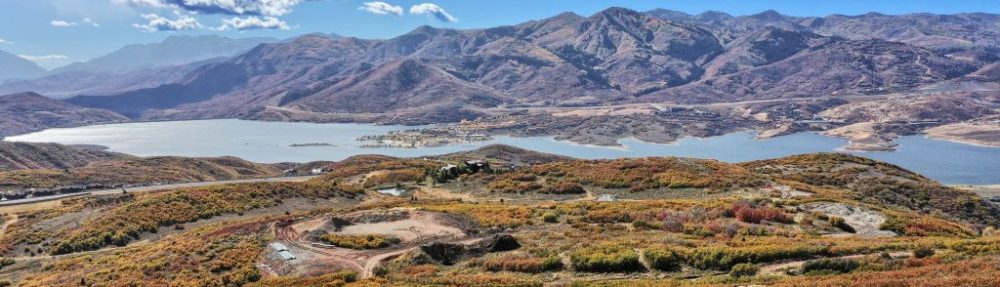
Hideout, incorporated in 2008 on the eastern shore of Jordanelle Reservoir, was built largely around a single master-planned vision. Mustang Development, led by developer Robert Martino, had been assembling and developing land in the area for years before the town formally existed.
In 2010, Mustang and the newly formed town entered into a sweeping contract known as the Master Development Agreement, or MDA. Such agreements are common in fast-growing Western communities, particularly where a private developer undertakes infrastructure work that a municipality would otherwise lack the resources to build on its own.
Under the agreement, Mustang would construct major public infrastructure—roads, culinary water systems, storm drains and sewer lines—not only for its own projects but for the broader build-out of the town. In return, Hideout agreed that Mustang would be reimbursed over time as other developers and property owners connected to that infrastructure.
The arrangement effectively made Mustang the town’s upfront infrastructure financier during its formative years.
Impact Fees and Reimbursement
The primary mechanism for reimbursement was impact fees. These are one-time charges paid when a building permit is issued, intended to ensure that new development pays its proportional share of the public facilities it relies on.
Utah law strictly regulates how impact fees are calculated, collected and spent. Cities must tie fees to actual infrastructure costs, maintain separate accounts and provide transparent accounting to ensure funds are used only for authorized purposes.
According to Mustang, those safeguards were not consistently followed in Hideout’s early years. While infrastructure continued to be built, reimbursement mechanisms lagged, leaving significant sums unresolved.
A Second Agreement, and Lingering Problems
In an effort to avoid litigation, Mustang and the town signed a Reimbursement Agreement in September 2020. The agreement reaffirmed that the 2010 MDA remained valid and enforceable and relied on a detailed impact-fee study prepared by a licensed engineer.
That study identified approximately $8.9 million in reimbursable infrastructure costs under state law, to be paid over time as development continued. The town subsequently adopted an impact-fee ordinance reflecting those findings, triggering its obligation to collect and remit fees accordingly.
Mustang later alleged that the town failed to consistently collect fees, did not maintain a dedicated impact-fee account and failed to provide required financial accountings.
The Lawsuit
In March 2023, Mustang filed suit against the Town of Hideout in Wasatch County’s Fourth Judicial District Court, alleging breach of contract.
The lawsuit did not seek immediate payment of the entire $8.9 million. Instead, Mustang claimed that at least $300,000 in impact-fee reimbursements had already accrued and gone unpaid, and that the town’s administrative failures made it impossible to verify the full extent of the shortfall.
The town denied the allegations, asserting that it had substantially complied with its obligations and raising defenses under Utah’s Impact Fees Act and contract law.
Court records show that as the case progressed, it became increasingly complex, involving questions of accounting, statutory compliance and long-term municipal practices.
An Unusual Change in Legal Representation
Court records show that on Sept. 2, 2025, the town’s general counsel, Polly McLean, formally withdrew from the case.
McLean serves as Hideout’s city attorney, a role that typically includes representing the municipality in litigation. Her withdrawal was unusual in that municipal attorneys often remain counsel of record in cases involving their city, even when outside firms are retained.
The docket does not state a reason for the withdrawal, and neither McLean nor town officials have publicly commented on it. Legal observers note that changes in legal strategy or governance priorities can sometimes coincide with shifts in representation. There is no indication in the court record that the withdrawal was disciplinary or related to the merits of the case.
The town continued to be represented by outside litigation counsel through the settlement.
The Settlement
Under the agreement, the town will pay Mustang $600,000, with $500,000 applied to the outstanding reimbursement balance and $100,000 allocated to interest, attorney fees and expert costs. The lawsuit will be dismissed with prejudice, and each side will bear its own future legal expenses.
In exchange, Mustang released the town from all claims related to impact fees that were not collected or not paid through Sept. 30, 2025. The agreement explicitly preserves the town’s reimbursement obligations from Oct. 1, 2025, forward.
Other Litigation Still Pending
While the agreement resolves the impact-fee lawsuit, it does not end all legal disputes between the town and its master developer.
Court records show that three additional lawsuits between Mustang and the Town of Hideout remain pending in Wasatch County. Those cases involve separate claims and are not affected by the settlement announced this month.
As a result, the agreement closes one chapter in the town’s legal history with its master developer, while others remain unresolved.
Transparency and Public Records
Town officials have said the settlement is being paid from cash reserves and that residents may obtain a copy of the agreement through a request under Utah’s Government Records Access and Management Act.
The Hideout Comment submitted a GRAMA request for the settlement agreement, which was provided by the town and is included with this story.
The payment does not fund new infrastructure or services. Instead, it addresses historical obligations tied to how Hideout managed growth during its early years.
A Line Drawn Forward
The settlement draws a clear line between past and future.
Historical disputes over impact-fee collection and reimbursement are now closed. Going forward, the town remains bound by the same agreements that governed its growth for the past 15 years—this time with the lessons of litigation firmly in mind.
 The Hideout Comment